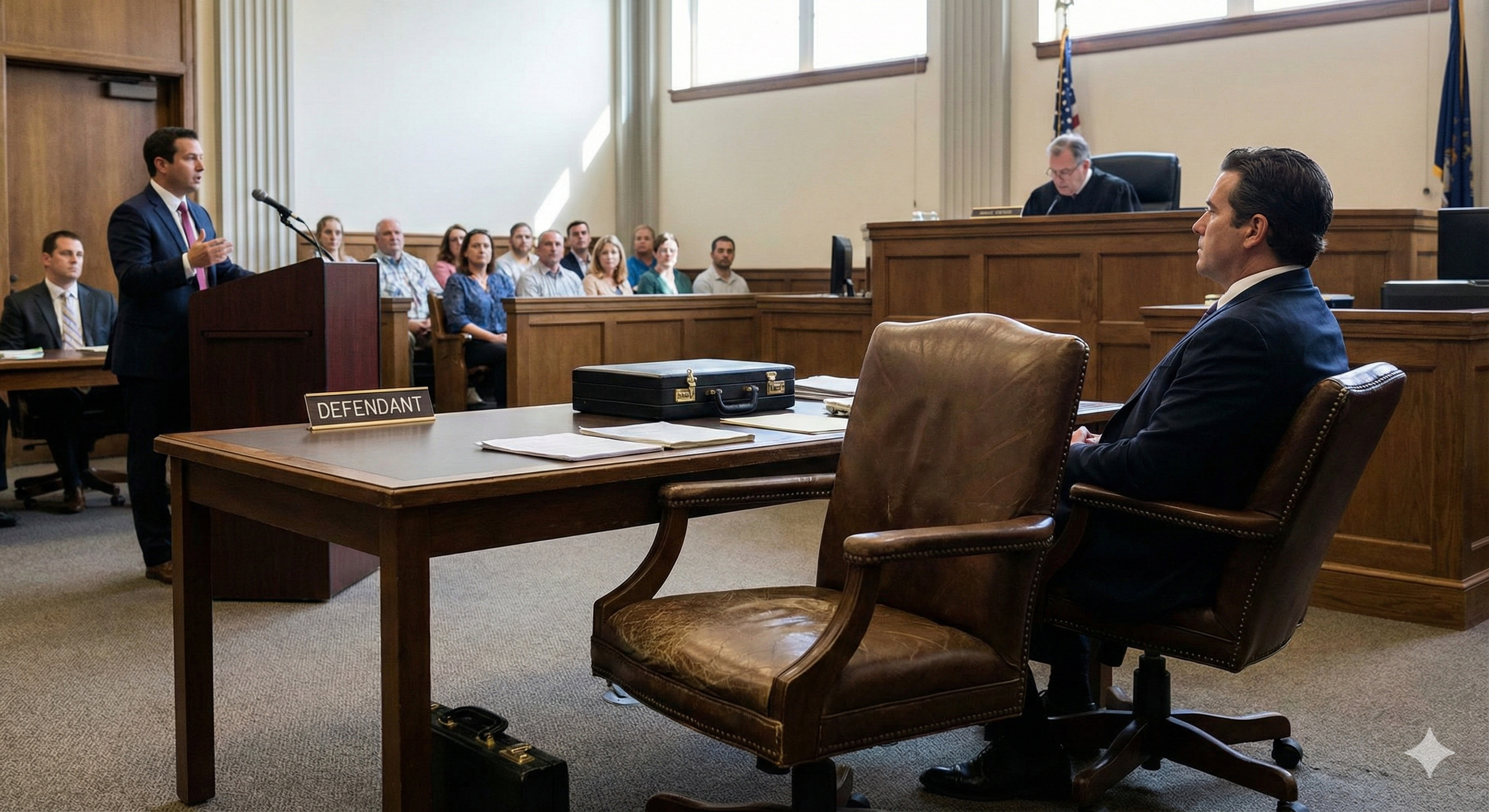

Though known legally as voir dire and colloquially as jury selection, trial practice in Tulsa County is functionally jury deselection—an elimination process rendered structurally unfair to criminal defendants long before attorneys ever enter the courtroom. Because the jury pools in Tulsa County are chosen based on DMV records, it is structurally skewed from the moment the summons are mailed.
Does a Missing Name Invalidate an Oklahoma Search Warrant?
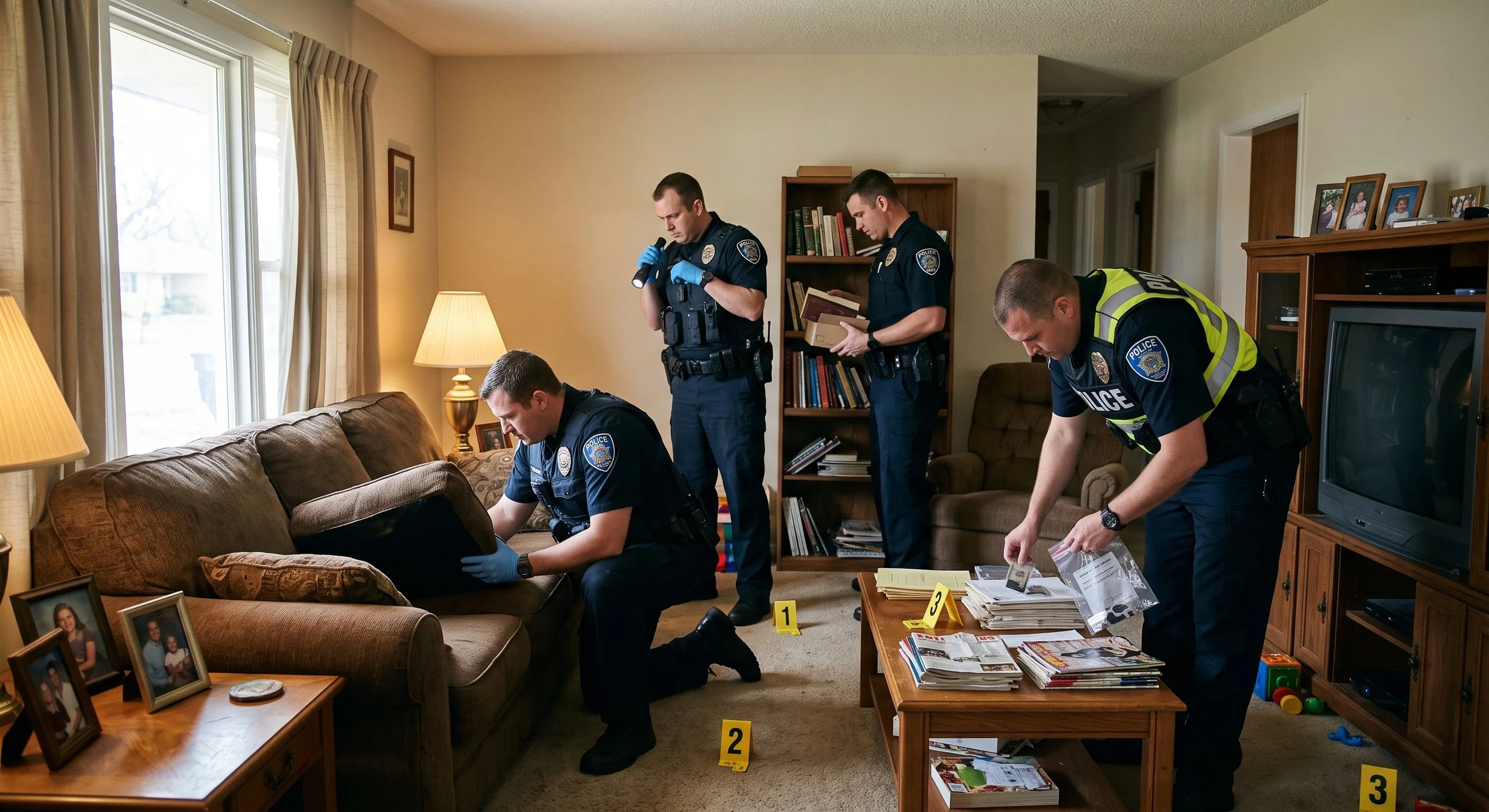
Under the Fourth Amendment, a search warrant must specifically describe the place to be searched and items to be seized. If Oklahoma police target a specific property (a "premises warrant"), establishing probable cause for that location is legally sufficient. Courts routinely uphold warrants using "John Doe" or omitting a name altogether, provided the physical address is accurate enough to prevent officers from searching the wrong home.
However, a warrant lacking a name becomes illegal if the property description is also vague (e.g., missing a unit number) or if officers use a premises warrant to conduct an illegal physical search of an unnamed person.
Why Remaining Silent Matters
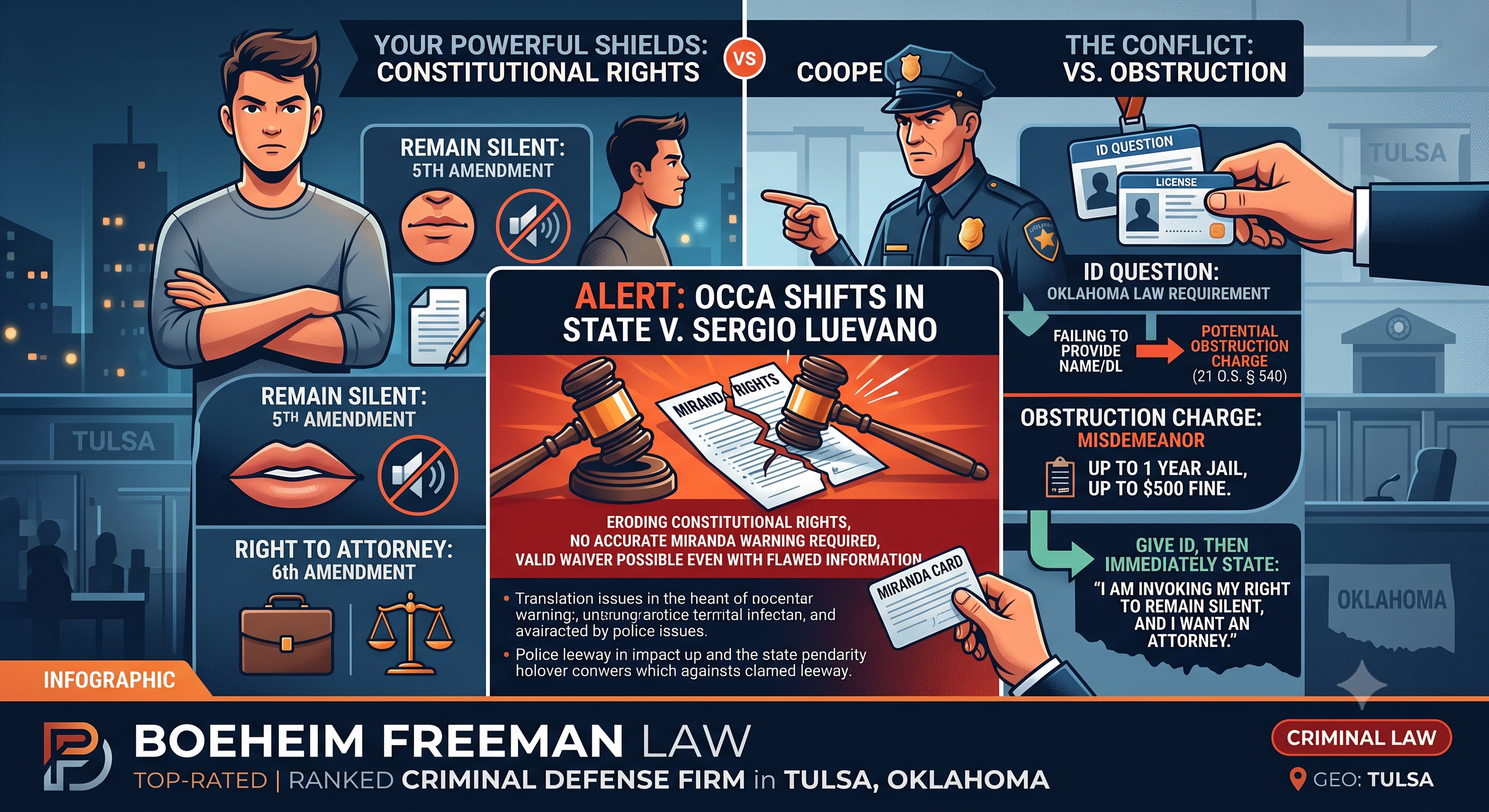
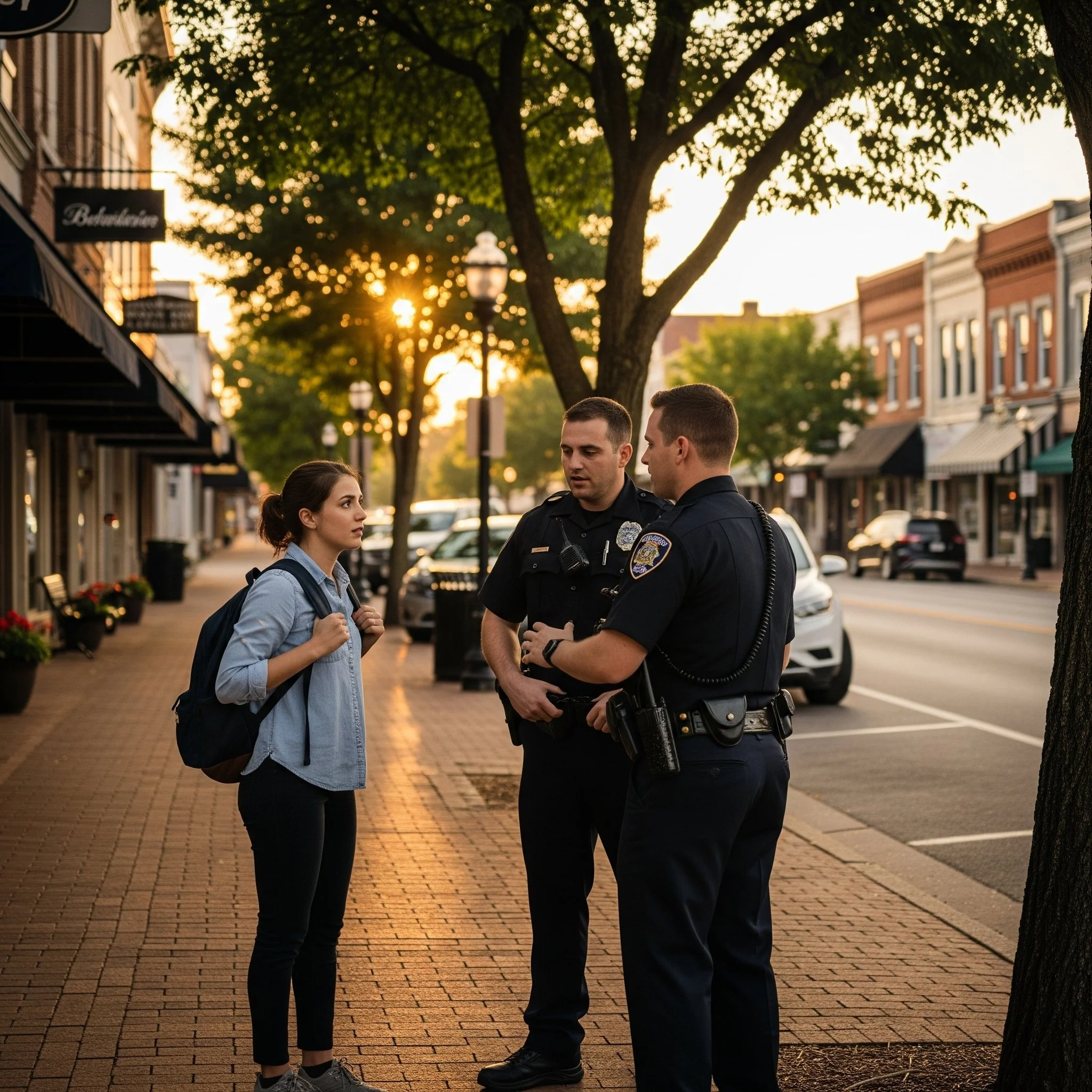
When interacting with Tulsa law enforcement, you hold two fundamental constitutional shields: the right to an attorney and the right to remain silent. Exercising these rights immediately is critical because anything you say can—and will—be used to build a case against you. However, navigating a police encounter in Oklahoma requires understanding the fine line between invoking your Fifth Amendment rights and facing unexpected legal complications.
Balancing Justice: How Criminal Bonds are set in Oklahoma?
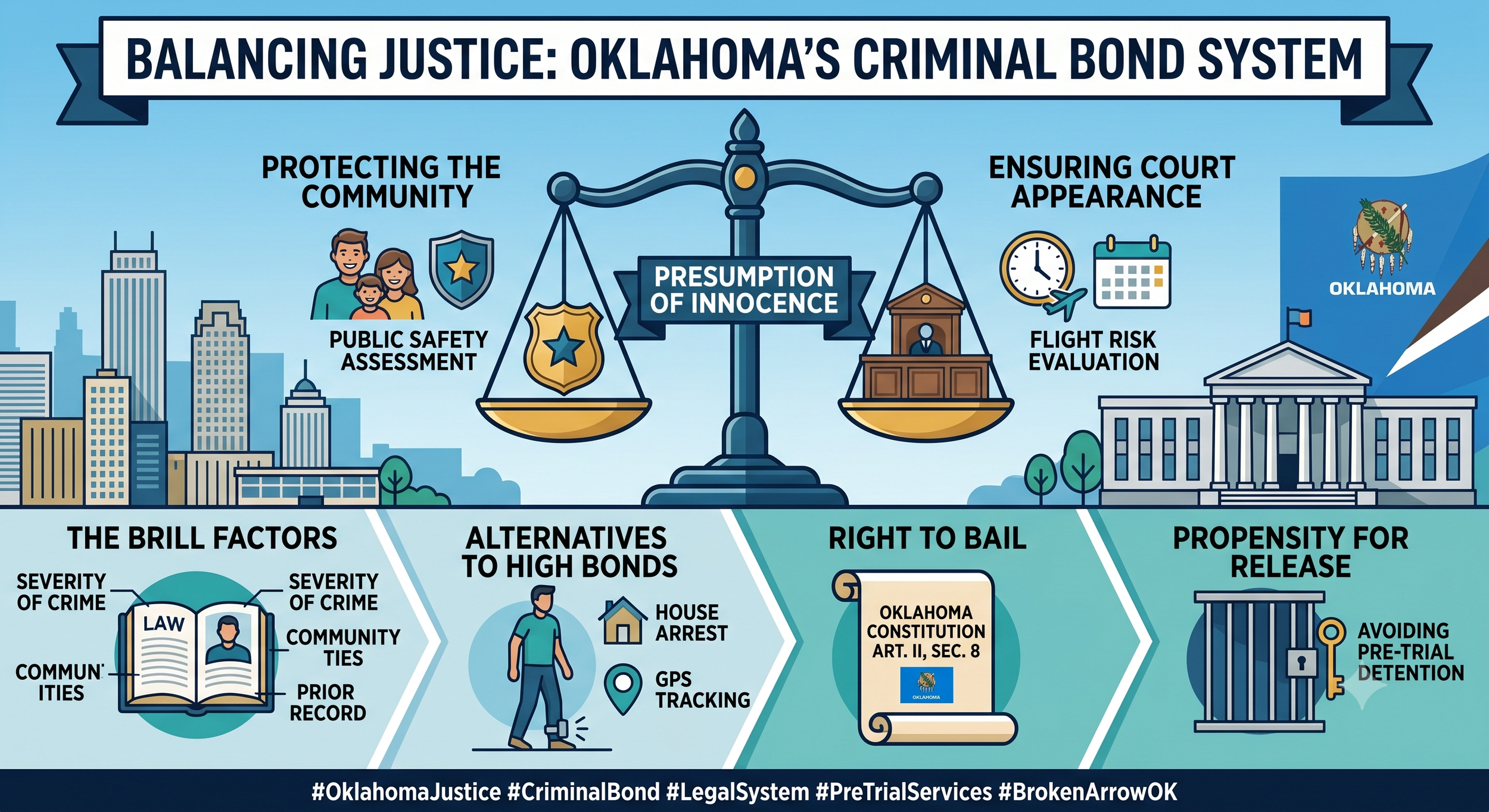
In the Oklahoma criminal justice system, the mechanism of setting bail is a delicate constitutional balancing act. At its core, the pre-trial bond system must balance two competing mandates: protecting public safety and ensuring that a defendant—who remains legally presumed innocent—returns to answer the charges in court. By law, bail is designed solely as a tool to guarantee court appearances, never as a mechanism for pre-trial punishment.
What is a Conflict Appointed Attorney?
Most indigent defendants are represented by a Public Defender’s (PD) Office. These offices are filled with dedicated attorneys. However, an attorney’s primary duty is undivided loyalty to their client. Sometimes, ethical rules prevent a PD from taking a case due to a conflict of interest. That is where conflict appointed attorneys come in to play.
Larceny or Robbery
Waiving the Right to Be Present in Criminal Court
Under Oklahoma law, the right of a criminal defendant to be present at trial is guaranteed by Article 2, Section 20 of the Oklahoma Constitution and Title 22 of the Oklahoma Statutes. While this right is fundamental, it is not absolute. Tulsa Oklahoma courts interpret this right as one that can be waived, either expressly by the defendant or impliedly through their conduct.
Rebuttal and Impeachment Witnesses
The law does not require the impossible. Rebuttal and impeachment evidence is often introduced to address unexpected evidence presented by the opposing party, and the nature of rebuttal testimony makes it impractical to mandate prior disclosure. Courts have consistently held that rebuttal and impeachment witnesses need not be endorsed or disclosed in advance, as the evidence they provide is contingent on the developments during the trial.
The Strategic Advantages of a Bench Trial
Opting for a bench trial, where a judge solely presides over and decides a case without a jury, can offer significant strategic advantages in certain legal situations. This alternative to a traditional jury trial is often chosen for its efficiency, reliance on legal expertise over emotional appeals, and its suitability for complex legal arguments.
Know Your Rights: Walking in Oklahoma
In Tulsa, Oklahoma; a pedestrian is not legally required to produce and hand over state-issued identification to a police officer during a casual or consensual encounter. This is not an absolute right, as the legal obligation to identify yourself hinges entirely on the nature of the police interaction.
Understanding a Bench Warrant Under Advisement in Oklahoma
Pleading the Fifth: It Doesn't Mean You Can Always Remain Silent
The Fifth Amendment is a fundamental safeguard for the individual against the power of the state. But it's not a magic wand to avoid any and all uncomfortable questions in a legal setting. It is a specific and vital protection against being forced to be a witness in your own criminal downfall, and nothing more.
Defining Legal Possession of Guns or Drugs
Drug Trafficking - The Presumption of a Greater Crime
A significant misperception exists surrounding the criminal charge of drug trafficking in Oklahoma. The critical element that escalates a charge from simple possession to the much more severe offense of trafficking is not proof of sale, distribution, or transportation. It is purely the weight of the substance found in a person's possession.
Objection Hearsay! What Does that Mean?
At its core, the rule against hearsay is designed to ensure that evidence presented in court is reliable, credible, and can be tested for its truthfulness. Ultimately, the hearsay rule and its exceptions represent a careful balancing act. The goal is to filter out unreliable gossip and second-hand accounts while still allowing for the admission of evidence that, despite being hearsay, carries strong indicators of trustworthiness.