
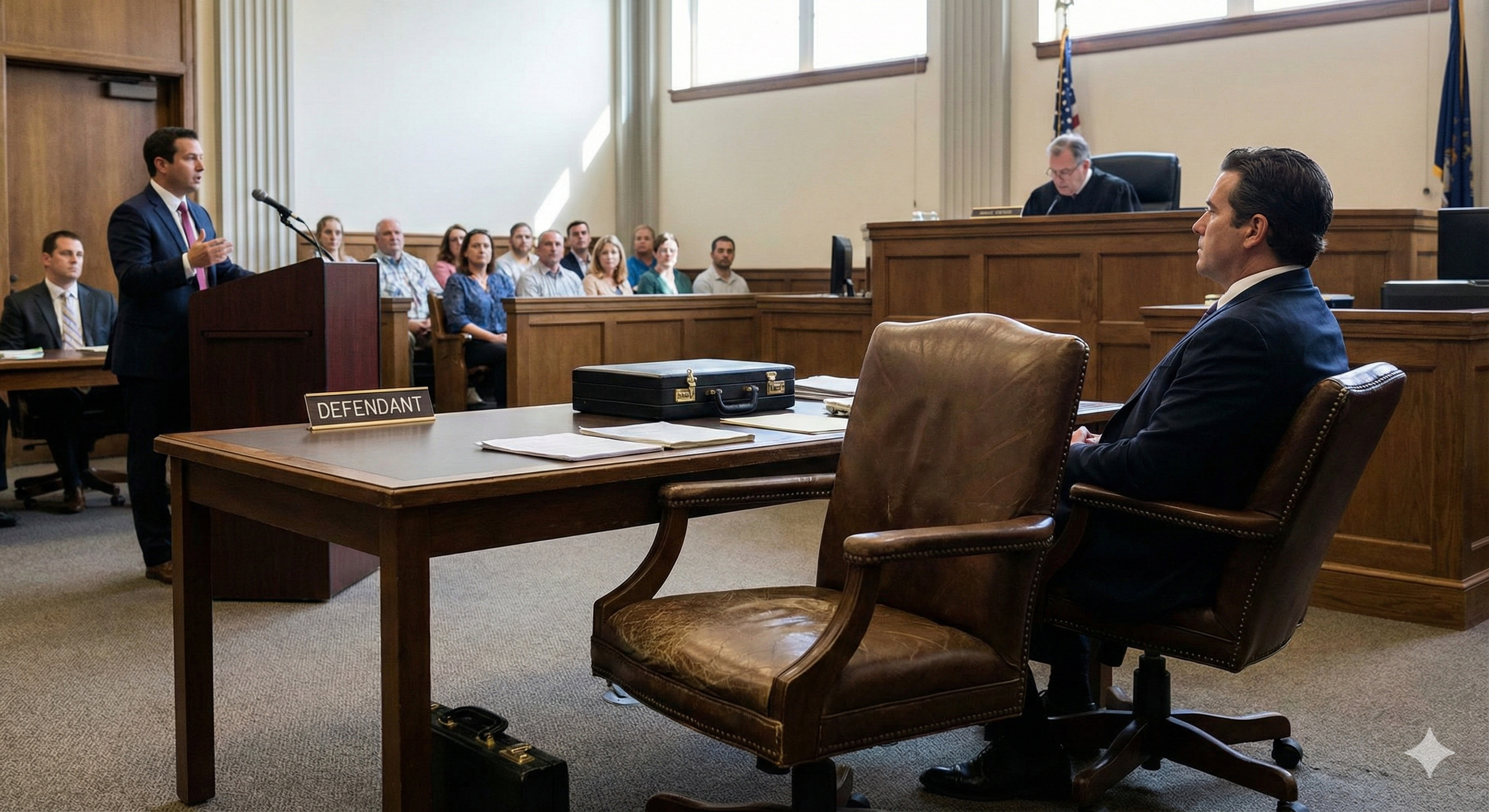
Waiver of Presence in Tulsa Oklahoma Criminal Proceedings
Under Oklahoma law, the right of a criminal defendant to be present at trial is guaranteed by Article 2, Section 20 of the Oklahoma Constitution and Title 22 of the Oklahoma Statutes. While this right is fundamental, it is not absolute. Tulsa Oklahoma courts interpret this right as one that can be waived, either expressly by the defendant or impliedly through their conduct.
Direct and Voluntary Waiver
For misdemeanor offenses, Tulsa Oklahoma law allows significant flexibility regarding a defendant's presence. Title 22 O.S. § 452 explicitly states that if the charge is a misdemeanor, "personal appearance is unnecessary, and the defendant may appear upon the arraignment by counsel."
For felony cases, the statute is stricter, mandating that "the defendant must be present." However, recent amendments and case law acknowledge that this presence can sometimes be satisfied via videoconference for certain procedural steps, or waived entirely if the defendant knowingly and voluntarily agrees to proceed in absentia, usually with the court's careful vetting to ensure the waiver is valid.
Inferred Waiver Through Conduct
Tulsa Oklahoma courts have adopted the stance that a defendant cannot use their own misconduct or absence to halt the administration of justice. A waiver can be inferred in two primary ways:
Disruptive Behavior: Consistent with federal standards, an Oklahoma judge has the authority to remove a defendant who persists in disorderly or disruptive conduct that makes it impossible to carry on the trial. By engaging in such behavior after being warned, the defendant effectively waives their right to be present.
Voluntary Absence: If a defendant is present at the commencement of the trial (generally interpreted as when the jury panel is sworn) but subsequently fails to appear, the court may find that the defendant has "voluntarily absented" themselves. Oklahoma precedent dictates that once the trial has begun, a defendant cannot stop the proceedings simply by fleeing or refusing to return to court.
Proceeding in Absentia
When a waiver is established—whether by the defendant's specific request in a misdemeanor case or by their voluntary absence/disruption in a felony trial—the court may proceed to verdict and sentencing. The Oklahoma Court of Criminal Appeals has upheld convictions where the trial continued in the defendant's absence, reasoning that the public interest in the orderly and expeditious disposition of criminal cases outweighs the right of a defendant who voluntarily forfeits their opportunity to appear.
Author: Brian J. Boeheim
By: Boeheim Freeman Law - 616 S. Boston Ave. - Tulsa, Oklahoma - 918-884-7791 - onyourworstday.com