
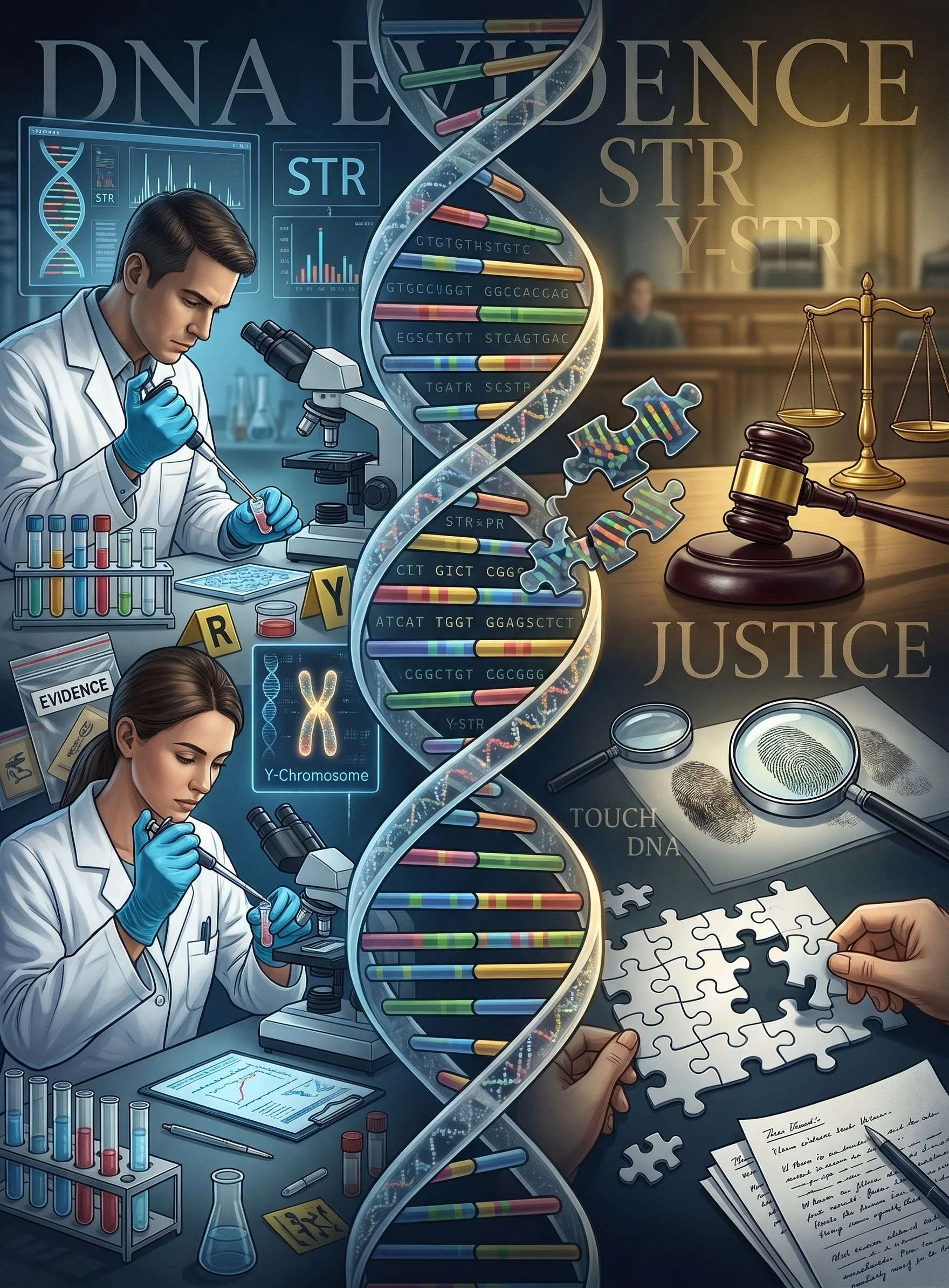
Why DNA Evidence is Critical in Criminal Cases
Over the past few decades, DNA testing has transformed the Oklahoma and national criminal justice systems. Often considered the gold standard of forensic science, DNA provides investigators with unmatched investigative leads. Because every individual (except identical twins) has a unique genetic blueprint, biological material left at a crime scene can link a suspect to a crime or, equally importantly, exonerate a wrongfully accused individual.
What is the Difference Between STR and Y-STR DNA Testing?
When forensic experts in criminal laboratories analyze biological evidence, they primarily utilize two distinct testing methods:
STR (Short Tandem Repeat) Testing: This is the standard method used in most criminal investigations. STR testing analyzes highly variable regions of nuclear DNA inherited from both parents. Because of its extreme precision, a full STR profile is highly discriminatory and can definitively link a specific individual to a piece of evidence.
Y-STR Testing: Unlike standard STR, Y-STR testing focuses exclusively on the Y chromosome, which is passed strictly from father to son. While Y-STR profiles are not unique to a single person (all male relatives in a paternal line share the same profile), it is highly valuable in complex scenarios. For example, in sexual assault cases where a minute amount of male DNA is mixed with a large amount of female DNA, Y-STR testing bypasses the female DNA entirely to isolate the male genetic material.
Is DNA Evidence Infallible?
A common misconception in the courtroom is that the mere presence of DNA equates to absolute guilt. While the underlying science is robust, real-world forensic application is not infallible.
Criminal defense attorneys frequently challenge DNA evidence based on:
Touch DNA: Modern testing is incredibly sensitive, routinely detecting microscopic genetic material transferred innocently from person to person, or person to object. An innocent person’s DNA can easily appear at a crime scene they never visited.
Laboratory Error: Cross-contamination during evidence collection or testing can compromise results.
Subjective Interpretation: Complex mixed-DNA samples require human interpretation, which is prone to subjective bias.
Ultimately, DNA is just one piece of the forensic puzzle. It requires rigorous legal and scientific scrutiny to ensure it is used for genuine justice, not just a rapid conviction.
Facing Criminal Charges in Tulsa, Oklahoma?
If you are facing criminal charges involving complex forensic evidence, you need an aggressive local defense team that understands the science and the law.
Contact Boeheim Freeman Law - Criminal Defense Attorneys in Tulsa, Oklahoma. We know how to challenge the prosecution’s evidence and protect your constitutional rights.
📞 Call us at 918-884-7791 🌐 Visit us online at onyourworstday.com